
Creating a local history website from a 94-year-old auction catalogue
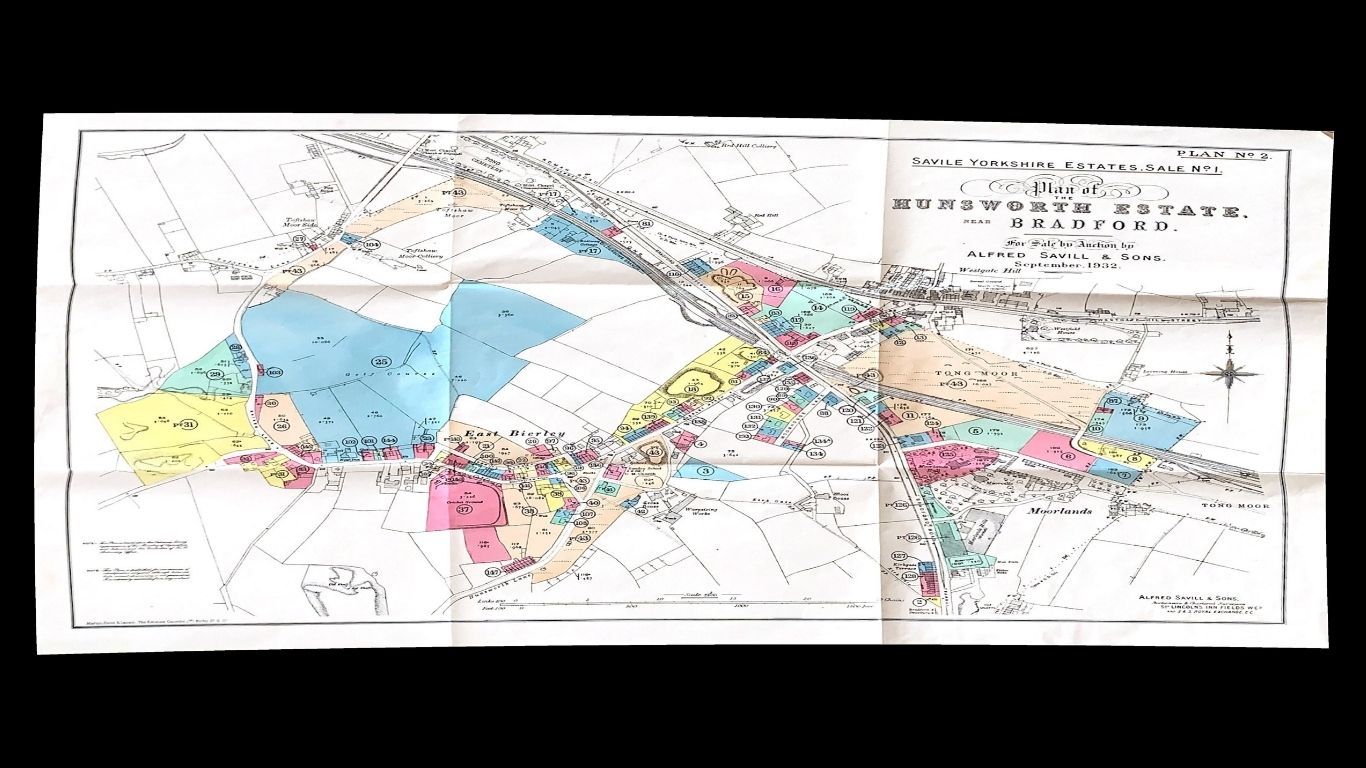
A few years ago, I was chatting with one of my neighbours, Peter, when he mentioned that he owned the original auction catalogue from the sale of the Hunsworth Estate in 1932. The catalogue listed more than 170 houses, farms, cottages, fields and other properties across Hunsworth, East Bierley and the surrounding area. Even better, it included the original estate maps and details of the tenants, rents and sale prices.
As someone who has always enjoyed British history, especially the history of places that still exist today, I was fascinated. Reading about the Romans or the Tudors is one thing, but discovering who lived in your own house almost a century ago somehow feels much more real. I asked if I could borrow the catalogue, carefully photographed and digitised every page before returning it safely to its owner.
At the time, I simply wanted to preserve the information. Once I'd finished scanning it, the files sat untouched on my laptop for three years.
A few weeks ago, while sorting through old folders, I came across the scans again. Looking through them with fresh eyes, it struck me that they contained far more than a list of properties for sale. They captured an entire community at a particular moment in history. The more I read, the more I wanted to make that information available to everyone, not just as a collection of scanned pages, but as something people could genuinely explore.
That idea brought together two interests that I've had for most of my life. I've been building websites for over thirty years, and I've always loved history. Creating an online archive for the Hunsworth Estate felt like the perfect opportunity to combine the two.
The first task was making the catalogue usable. I used Claude AI to read the scanned pages and convert the printed text into digital text that could be searched and displayed on a website. It also helped produce clean versions of the original pages so visitors can still read the catalogue exactly as it appeared in 1932.
With the information extracted, I turned to ChatGPT and Codex to help build the website itself. I should stress that they didn't do the research for me. Instead, they acted as development assistants, helping me create the features I had in mind while I remained firmly in charge of the design, the historical content and the overall direction of the project.
The maps became one of the most rewarding parts of the build. The auction catalogue included beautifully drawn estate plans, but they needed a lot of work before they could be compared with today's landscape. Using MapWarper.net, I aligned the historic maps with modern geography by matching landmarks that still exist. MyGeodata.cloud then converted those maps into a format suitable for mapping software, allowing them to sit accurately on top of OpenStreetMap, the modern map used throughout the website. The result is a simple slider that lets visitors fade between 1932 and the present day, making it easy to see how villages have grown over the last ninety years, and in a lot of cases, how very little has changed.
The maps still needed one final piece of work. Every auction lot had to be outlined individually so visitors could click on a property and discover its history. For that, I used an online editor called GeoJSON.io, tracing the boundary of every field, garden and property by hand. Some lots were straightforward; others took quite a bit of detective work, comparing the historic maps with modern aerial photography until I was confident I'd identified the correct boundaries.
As the website grew, so did the research. I found myself reading about the Savile family, whose ownership of the estate stretched back centuries, exploring the history of local schools, tracing changes to farms and roads, and uncovering stories that went well beyond the auction itself. What started as a way of sharing one catalogue gradually became a much broader history of the area.
Although the archive is now online, I don't really see it as finished. There are more stories to tell, more photographs to collect, more maps to improve and, I hope, contributions from local residents who have their own memories and family connections to add. Local history is never really complete because every generation leaves something behind for the next.
If you'd like to explore the Hunsworth Estate Archive for yourself, compare the 1932 estate maps with today's villages, or simply discover a little more about the place we call home, I'd love you to take a look at hunsworth.tonypreece.co.uk.